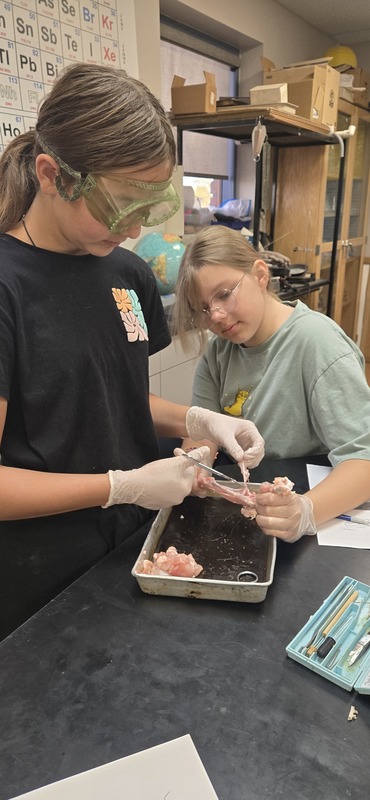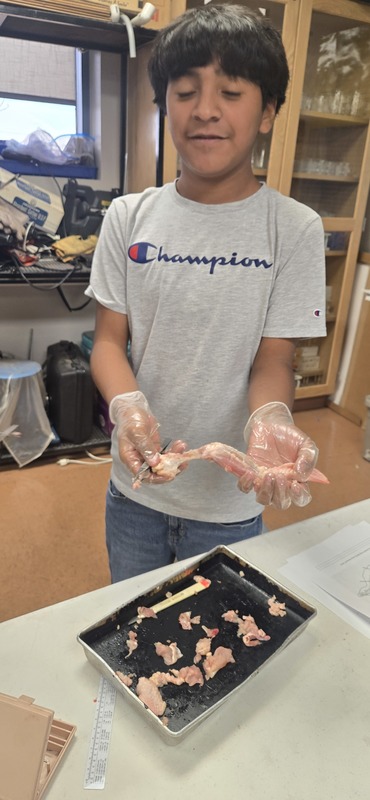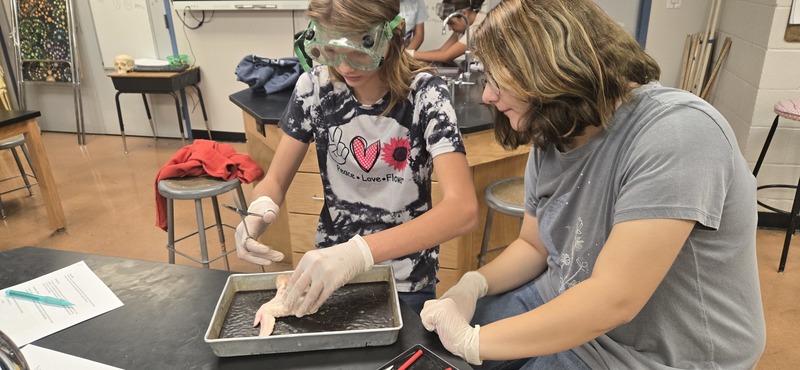
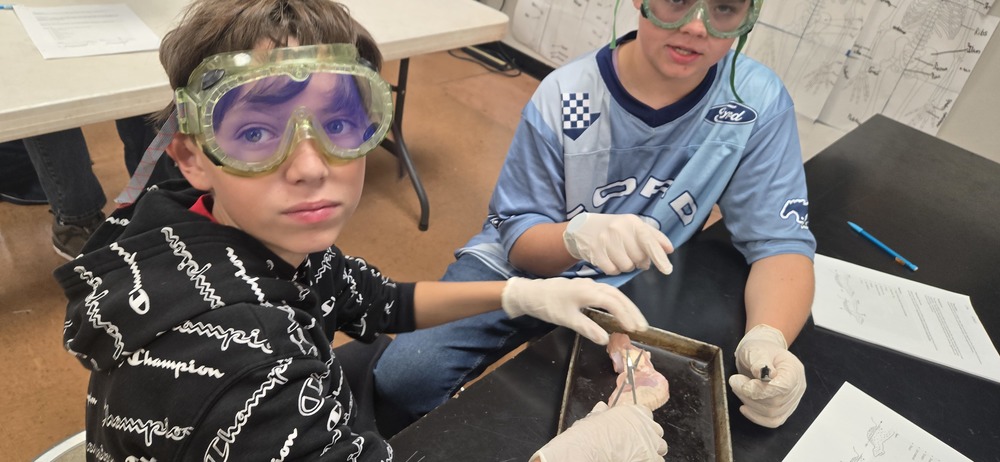
In 6th and 7th science class this semester, students recently dissected
chicken wings to learn how muscles, bones, and tendons work together.
While it may seem unusual, this activity closely connects to real-world
science and medical careers.
A chicken wing has structures similar to a human arm. By pulling on
tendons and watching the wing move, students could see how muscles
create motion—just like in the human body. This hands-on experience
helps students understand anatomy in a way that pictures and videos cannot.
Dissections also build important skills such as careful observation,
following directions, and lab safety. These skills are used by doctors,
veterinarians, and scientists every day.
The chicken wing dissection shows that science is more than reading a
textbook—it is about exploring, discovering, and learning through real
experiences.