
Hello Families,
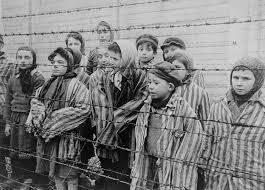
We have just finished our unit on Science and Science Fiction and are now starting a reading unit titled Holocaust: Memory and Meaning.
In this unit, students work with a variety of memoir and primary source materials connected to the Holocaust to explore two key questions: How does a society and its people become participants (willingly or indifferently) in such horror? And what is the responsibility of those who experienced, witnessed, participated in, or now learn about these events? The reading materials are selected to present events from several different perspectives—those of perpetrators, survivors, victims, bystanders, and witnesses. They enable students to begin to understand the strategies Nazis used to influence the mindset of a nation, and to reflect on the human responses to the unfolding of genocide.
First, students analyze “I Cannot Forget,” a poem by Holocaust survivor Alexander Kimel that explores the haunting power of memory. Next, students read from the memoir Shores Beyond Shores, in which author Irene Butter describes how her Jewish family’s happy life in Berlin was slowly destroyed as the Nazis came to power. As a counterpoint, students examine passages from A Child of Hitler by Alfons Heck, an Aryan boy who became an enthusiastic member of the Hitler Youth. Students also explore articles and images that show the Nazi propaganda machine in full swing during the 1936 Olympic Games in Berlin, where the government sought to showcase the supposed superiority of the Aryan race. Finally, students read additional excerpts from Child of Hitler, Maus, and Night, where participants and survivors trace the descent into darkness: from Kristallnacht, to the creation of the ghettos, and eventually to the death camps. As students explore these materials, they are guided by a series of interviews with Holocaust survivor Irene Butter, who speaks about her family’s experiences, the work she does to educate young people about the Holocaust, and her hope that more people stand up against injustice.
Here are some conversation starters that you can use during this unit to promote discussion and encourage continued learning with your student.
1. According to the texts you’ve read in this unit, why is remembering important? What memories stood out to you as you read these texts? How might these memories, and those like them, help to ensure events like the Holocaust don’t happen again?
2. Which text, image, or video had the greatest impact on you? Why?
3. What were a couple of the strategies that the Nazis used to lay the groundwork for the Holocaust? What were the impacts of these strategies on those they sought to isolate, oppress, or control?