
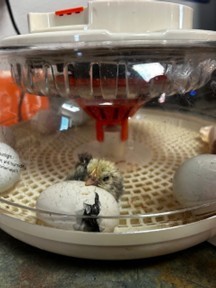
This month, our kindergarteners became real-life scientists as they incubated and hatched chicken eggs right in our classroom! What an exciting and memorable learning experience it has been.
As part of our Amplify Knowledge Curriculum, students have been learning about farming—what farmers do, how animals are cared for, and where our food comes from. Through these lessons, students explored the roles of farmers, the life cycles of farm animals, and the importance of responsibility in caring for living things. Because of this strong foundation, students were able to make meaningful connections when we began our egg incubation project.
Before placing the eggs in the incubator, we reviewed what we had learned about chickens on farms. Students discussed how hens lay eggs, how farmers collect them, and how some eggs can grow into baby chicks. They were fascinated to learn that fertilized eggs, when kept warm and safe, can develop into chicks over 21 days. Using the knowledge they gained from the farming unit, students understood that the incubator worked like a mother hen—keeping the eggs warm so the chicks could grow.
Throughout the 21-day process, students practiced patience, observation, and teamwork. Each day, we checked the temperature and humidity of the incubator and talked about why those conditions were important. Students made predictions about when the chicks would hatch and learned new vocabulary words such as incubate, hatch, embryo, and life cycle. Watching the eggs begin to crack during the hatching process was a magical moment for everyone!
This hands-on experience brought our farming unit to life in a way that books alone cannot. The joy and wonder on students’ faces as they watched the chicks hatch showed just how powerful experiential learning can be. We are so proud of our young learners for being thoughtful observers and caring classroom farmers!
What an unforgettable way to connect classroom learning to the real world!