
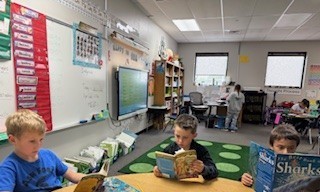
Why do students need to understand what they read? Everytime they read, there is some purpose to understand it. It can be for simple enjoyment about the characters, setting and plot or to understand why the author wrote a specific text. As students get older, text becomes more complex as does the vocabulary, so strategies implemented in school help reading comprehension later. Also, reading a wide range of different texts and building vocabulary knowledge helps with reading comprehension.
Strategies students will use for better reading comprehension may come naturally while others need to be specifically taught and practiced.
Teaching students to monitor their understanding. What did I just read? Does it make sense? Did I misread a word? Do I need to reread the text?
Think about their thinking before, during and after they read. This is called metacognition, being aware of your thinking. Good readers set a purpose for reading, and identify any difficulties with comprehension and look back and remedy it.
Use graphic organizers to help put information into story maps, Venn diagrams, or cause and effect organizers. Later in life, students can identify how different texts are arranged and what kinds of information they should pay attention to.
Ask and answer questions about the text students read. There are different types of questions that allow for a different kind of interaction to the text. Can you find the answer right there? Do you have to infer what it wants you to know? How can you connect to the text personally? Asking and answering questions about text leads us to deeper understanding.
Using questions to relate different parts of the text to one another for better understanding overall.
Recognizing story structure. If students can recognize story structure based off of what they have previously read, they can predict how stories are set up and look for those patterns. Therefore helping comprehension.
Summarizing helps students identify main ideas and recall what they read.
As students eventually enter the workforce, college, and adulthood, they need to comprehend various texts that are more complex with larger implications for functioning in their daily lives.
Help your student become meta in their comprehension by reading with and to your student. But don’t stop there. How can you teach your student to engage, clarify and evaluate the text? It is key to help guide them to feeling some wonder and awe concerning the world they are reading about through these comprehension strategies.