
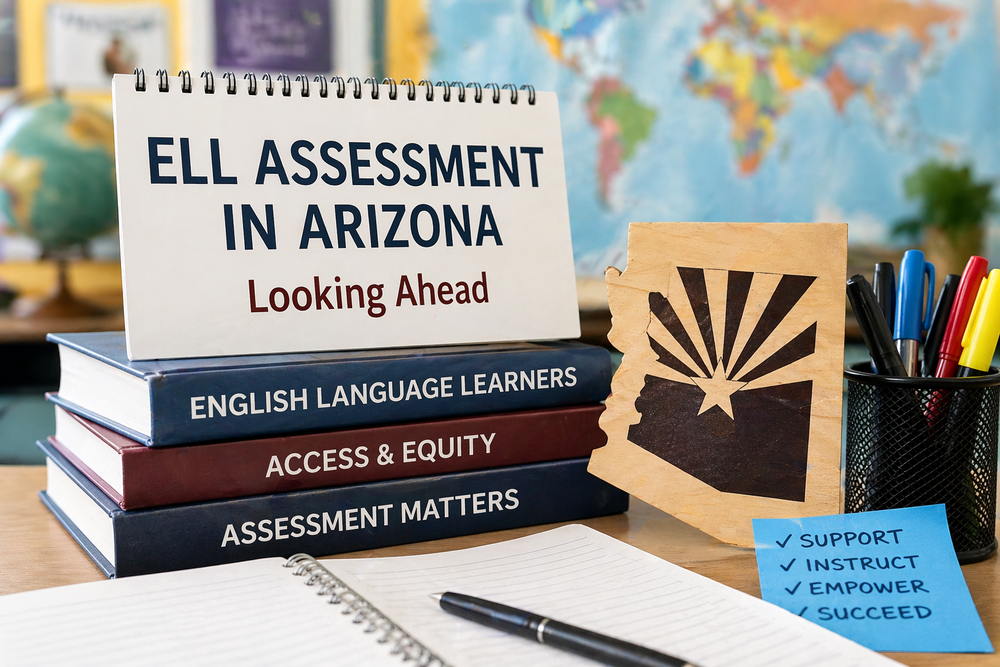
The Arizona Department of Education is seeking proposals for a new ELL assessment system to replace the AZELLA contract, which expires June 30th, 2026. The AZELLA system currently identifies, places, and reclassifies the ELL students across the state of Arizona as it has since 2006.
The AZELLA has faced considerable opposition from educators, researchers and civil rights groups across the state for years. There are concerns that the examination system is flawed with questionable methodology in over-identifying students, the cut-scores for proficiency, and its unidimensionality to segregate students. Additionally, the English-only component that the AZELLA and its hinged Structured English Immersion models adhere to is under critical scrutiny for its effectiveness and impact on ELL students’ academic achievement and equitable access to education. Should this English-only policy change or shift, this would greatly impact the allowable proposals that the ELL assessment system in Arizona could pursue.
The state of Arizona has consistently supported the AZELLA because it has been designed to be standardized and easily measurable. It is seen as a necessary component in the realm of standardized testing. Seeing as Arizona is the only state to have an English-only policy in the classroom, this assessment system is the only one that is aligned to the systems that support that policy.
For the new incoming proposals, the state is looking for an assessment system that complies with state and federal requirements, is standardized and focuses on proficiency, as well as aligning with the current Structured English Immersion programs present in the state should those remain unchanged.
What does this mean for the Ash Fork School District? The staff in the English Language Development Program are anxiously awaiting news on the proposals in order to best align our instruction and support in the situation that the state finds a new assessment system suitable for Arizona. The greatest hope is that the state will take a critical look at the effectiveness of the State’s policies and systems overall surrounding ELL students.